Fronius TIG Welding Machine Price, Inverter Welders, and Aluminum MIG: A Practical Buyer's Answer
Posted on 2026-09-28 by Tobias Lindgren
The short answer
If you're comparing Fronius TIG welding machine price, don't price the box alone. A usable Fronius TIG package usually includes the power source, torch, ground cable, foot pedal or amptrol, gas regulator, and consumables. Based on quotes we've handled in Q1 2025, a complete Fronius TIG setup typically lands in the $3,000–$8,000 range for many shop-level AC/DC or DC-only packages, but verify with a local distributor because options swing that number fast. For aluminum MIG, you need more than a standard MIG welder: a spool gun or push-pull torch, 100% argon, aluminum drive rolls, a Teflon or nylon liner, correct contact tips, and enough power to avoid cold lap.
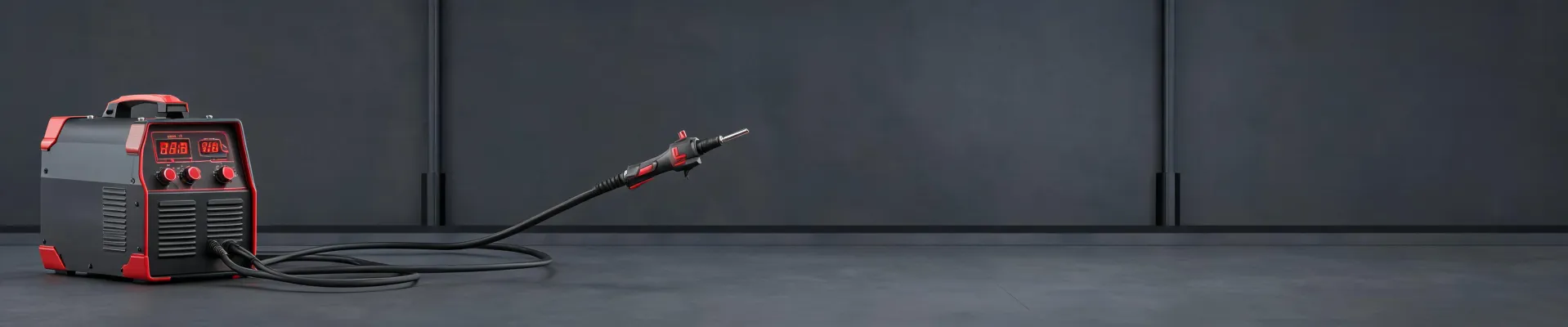
And if you're searching for a 'red welding machine,' color is not a spec. Fronius machines are often red, but so are other brands. Look at process capability, duty cycle, input voltage, and service support.
Why I'm writing this
I coordinate emergency welding equipment and repair orders for an industrial supply company. I've handled 200+ rush orders in 9 years, including same-day turnarounds for fabrication shops and plant maintenance teams. When a customer calls at 6 a.m. because a TIG torch died before a stainless job, or a MIG feeder quit mid-aluminum job, we're the ones triaging it.
Here's what I've learned: most urgent welding equipment problems aren't caused by the machine being bad. They're caused by buying the wrong package, missing one accessory, or not understanding what the machine is actually supposed to do. That's what this covers.
Fronius TIG price: what you're really paying for
Fronius TIG welders are premium machines. You're not just buying an inverter; you're buying arc stability, high-end controls, job memory, and service support. What most people don't realize is that the TIG price you see online is often just the power source. The torch, foot pedal, cooler, cart, and gas regulator can add hundreds or thousands.
In my role quoting emergency replacements, I see a few common Fronius TIG packages:
- DC TIG only — good for steel, stainless, and some repair work. Usually lower cost.
- AC/DC TIG — needed for aluminum. More expensive because of the AC waveform controls.
- Water-cooled packages — for high-duty-cycle or thicker work. Add a cooler and heavier torch.
I don't have hard data on every regional Fronius TIG price, but based on quotes we processed in early 2025, a complete Fronius AC/DC TIG package often starts around $4,000–$5,000 and can run past $8,000–$10,000 with water cooling, advanced controls, and accessories. A basic DC TIG setup can be lower—sometimes $2,500–$4,000—but again, verify current pricing with a distributor.
What drives the price? Honestly, it's the controls and the duty cycle. A Fronius inverter welder with better arc control helps a skilled welder produce cleaner starts, less tungsten contamination, and more consistent beads. That's the value. If you're doing thin stainless or aerospace-adjacent work, it matters. If you're doing rough farm repair, a cheaper machine might be enough.
Fronius inverter welder: why the power source matters
An inverter welder converts input power to a controlled welding output. Fronius inverter welders are known for stable arcs and good arc dynamics. The practical benefit is less spatter, smoother starts, and better control on thin material. That's especially true for TIG and pulse MIG.
But here's a causation reversal I see a lot: people think expensive machines produce better welds. Actually, machines with stable arcs and good controls let skilled welders produce better welds consistently—then those results justify the price. The machine doesn't replace technique. It amplifies it.
For B2B buyers, the real question is: what's your rework cost? If a bad weld means a $15,000 part gets scrapped or a field crew waits, the premium for a Fronius inverter welder can pay for itself fast. If you're welding trailer frames with generous tolerances, a mid-range machine may be the smarter buy.
What is a welding machine's purpose?
A welding machine's purpose is to provide controlled electrical energy that creates and maintains an arc. That arc melts base metal and filler to join parts. Different processes—MIG, TIG, stick, plasma, laser—control that arc differently. MIG is fast and good for production. TIG is slower and cleaner, good for thin or high-quality work. Stick is rugged and good for outdoor repair. Plasma cuts. Laser welds with high precision and low heat input.
So when you ask what is the welding machine purpose, the answer isn't just to weld. It's to deliver the right arc for your material, thickness, joint, and quality standard. A Fronius TIG machine and a Fronius MIG machine both weld, but they solve different problems.
'Welding machine red': don't buy by color
If you're searching for a welding machine red, you've probably seen red machines from Fronius or other brands. Red is a common color for welding equipment. But color tells you nothing about capability. I've never fully understood why some buyers fixate on the color of the case. My best guess is that it's a proxy for brand recognition.
Here's something vendors won't tell you: the color of the machine has zero impact on weld quality. What matters is:
- Input power—single-phase or three-phase
- Duty cycle at your amperage
- Process capability—MIG, TIG, stick, pulse, AC/DC
- Torch and feeder compatibility
- Local service and parts availability
If you want a red Fronius machine because you've used one and trust the brand, that's fine. Just don't buy a red machine from another brand assuming it's the same thing.
What you need to weld aluminum with a MIG welder
Aluminum MIG is not the same as steel MIG. The wire is softer, the oxide layer is stubborn, and the heat transfers fast. Here's the minimum kit I'd want on a truck or in a shop:
- Spool gun or push-pull torch. Aluminum wire is too soft for a standard long MIG gun. A spool gun puts the wire close to the torch. A push-pull torch does the same but with a longer reach.
- 100% argon shielding gas. Don't use C25 for aluminum. Argon is the standard. According to AWS recommendations, aluminum MIG typically uses DCEP with argon.
- Aluminum drive rolls. U-groove rolls, not V-groove. V-groove crushes the wire.
- Teflon or nylon liner. Reduces drag on soft aluminum wire.
- Contact tips sized for aluminum. Use the right tip for your wire diameter—usually 0.035 in or 0.045 in for many shop jobs.
- Filler wire. 4043 is common for general work. 5356 is stronger and better for anodized parts, but it's stiffer.
- Enough power. Aluminum needs more amps than steel of the same thickness. A 200-amp machine can do thin aluminum, but 250+ amps gives you more headroom.
I was so glad I insisted on a spool gun for a customer's emergency aluminum repair last year. They almost tried to run aluminum wire through a standard MIG gun. That would have bird-nested in minutes and missed their production window. We set them up with a spool gun, 100% argon, and 4043 wire. They were welding within an hour.
If you're using a Fronius MIG welder like a TransSteel or TPS/i, Fronius offers push-pull torch options and synergic lines for aluminum. That makes setup easier, but you still need the right gas and consumables.
When this advice doesn't apply
This isn't a universal buying guide. If you're welding at home, doing occasional repairs, or working on non-critical projects, a premium Fronius TIG package may be overkill. A basic inverter welder and a spool gun can handle a lot. If you're in a regulated industry with weld procedures and traceability, you need to match the machine to the qualified WPS, not just buy the most expensive option.
Also, prices vary by region, distributor, and time. I don't have hard data on every market, and I'm not a Fronius employee—I just see a lot of emergency welding equipment orders. Use this as a starting point, then call a local distributor for current Fronius TIG pricing and package options. And if you're welding aluminum, test your setup on scrap before you touch the real part.

Tobias Lindgren
Tobias Lindgren is a digital inkjet systems analyst specializing in UV flatbed, roll-to-roll UV, and general inkjet printers for signage, rigid media, labels, prototypes, and promotional graphics. He references ISO 12647-7 for applicable digital proof evaluation while comparing CIELAB colour difference, resolution, droplet size, pass count, curing energy, adhesion, banding, media flatness, throughput, and ink consumption. His evaluations help print service providers and equipment buyers balance colour control, substrate compatibility, finishing requirements, productivity, maintenance burden, and cost per sellable print.
Leave a Reply
Recent welding notes
The Cheap Marking Equipment Trap: Why Code Quality Is a Brand Decision
A purchasing manager's deep dive into the hidden costs of CO2 laser marking machines, continuous inkjet printers, and other marking equipment—and why output quality shapes customer perception.
Audio Factory vs Audio Manufacturer: Small-Order Buying for Stage Speakers, Subs, and Point Source Gear
A procurement admin compares factory-direct audio suppliers and established audio manufacturers for small orders—MOQs, point source speakers, subwoofers, HDL20 stage speakers, support, and total cost.
Fronius, Wattpilot Pricing, and the Welding Questions I Actually Get Asked
A procurement manager's no-fluff answers on Fronius welders, Wattpilot Australia pricing, stick welder value, Menards MIG welder options, roaddogjobs welder listings, and what a PPR welding machine actually is.
Why I Choose Specialized Welding Suppliers Over 'One-Stop' Industrial Vendors
An admin buyer's argument for specialization in welding equipment purchasing, from Fronius Primo 5.0-1 pricing to welding carts, Rogue TIG welders, manipulators, and the Mexico electric welding machine market.
Why I Pay for Delivery Certainty on an Elite Welding Machine — and Where Fronius Fits
A procurement manager explains why the cheapest welding quote often costs more, how to evaluate MIG welder purpose, small TIG welders for aluminum, and why Fronius downloads matter for TCO.
Fronius Cobot Welding System: How I Saved a $42K Girth Welding Contract with 36 Hours to Spare
An emergency welding contractor shares the real story of rescuing a failed girth welding project using a Fronius cobot welding system, TIG welder electrodes, and a used laser welding machine—plus what I learned about Fronius Primo 5.0-1 pricing and equipment sourcing.
Fronius Welders, Ohmpilot Pricing, and Truck-Bed Rigs: 7 Questions I Actually Get Asked
Straight answers on Fronius welder value, Fronius Ohmpilot price ranges, ventilation setups, truck-bed welding rigs, and what's actually moving in welding machine news — from someone who coordinates emergency equipment orders for a living.
Fronius vs Millermatic 211 Pro vs Ruffian: How to Choose a MIG Welder by Scenario
A procurement admin's scenario-based guide to MIG welder selection, including Fronius welder reviews, Millermatic 211 Pro MIG welder, Ruffian welding machine, and Fronius Smart Meter 63A-3 price in Germany.
The Procurement Trap: Why a Cheap Welding Machine 250 Costs More Than It Saves
A purchasing administrator's deep dive into why cheap welding equipment hurts quality perception, uptime, and total cost—and how Fronius, Rebel AC/DC welders, Fronius welder parts, and laser systems fit into a smarter buying process.
Fronius, Small Orders, and the Hidden Cost of Cutting Corners in Welding and Solar
A quality manager explains why small orders for Fronius welders, commercial grid-tie solar inverters, and fiber optic welding machines often hide bigger costs—and how to verify specs without overpaying.