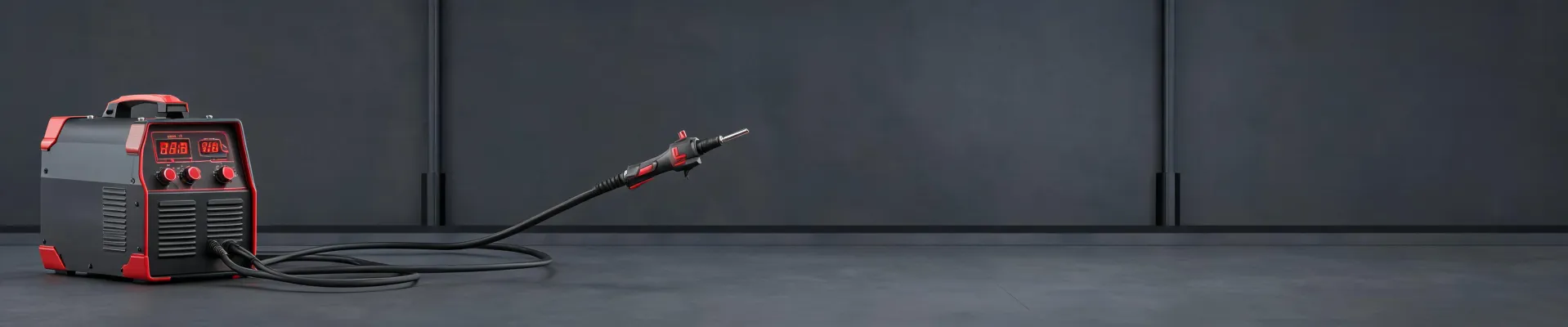
No Single 'Best' Welding Machine: How to Choose Based on Your Actual Scenario
Posted on 2026-09-23 by Elise Marceau
Why 'Best Welding Machine' Lists Miss the Point
I coordinate emergency equipment orders for industrial clients. When a welding machine goes down 36 hours before a deadline, or when a solar project needs on-site welding capacity in 48 hours, my phone rings.
Last quarter alone, we processed 47 rush orders. Ranging from $800 portable units to $15,000 integrated systems. And in that time, I've watched smart engineers order the wrong machine because they searched for the "best" one instead of asking: best for what?
The truth is, there is no universal answer. A machine that's perfect for a remote pipeline job will be useless in a precision aerospace shop. So instead of a ranking list, let me give you what I actually use when triaging a rush order—three scenarios, and how to figure out which one you're in.
Scenario A: You Have No Reliable Grid Power
This is the scenario that catches people off guard. You're on a remote job site—maybe a pipeline in West Texas, maybe a temporary structure in a disaster zone—and there's no stable 240V feed.
In March 2024, a contractor called me at 7 AM. Their main power source had failed, and they needed to weld pipe joints for a water treatment facility commissioning the next day. Normal turnaround for a standalone generator plus welding equipment is 5-7 days. We found a cordless PPR welding machine—battery-powered, no cord, no generator—and had it on a plane that afternoon. The rush fees added $800 on top of the $2,200 equipment cost. But the alternative was a $15,000 penalty clause for missing the commissioning deadline.
Here's what most people don't realize about cordless options: the battery life is the real spec. Look for continuous weld time at 150A—not standalone specs. Most units give you 20-40 minutes of actual arc time. That's fine for intermittent welding, but if you're running beads all day, you'll need multiple batteries or a hybrid solution.
"If your worksite has unstable power, 'cordless' isn't a luxury—it's the difference between finishing the job and sending everyone home early."
Scenario B: Precision and Traceability Are Non-Negotiable
Some industries—aerospace, pressure vessels, structural steel under AWS D1.1—require documented weld quality and repeatable results. Cheap equipment can't deliver that.
When I'm sourcing for this scenario, I look at two things: arc stability and service network. A Fronius TIG welder, for example, has a reputation in these circles not because of marketing, but because the arc starts clean and holds stable at low amperages. That matters when you're welding 0.8mm stainless.
I learned this lesson in 2022, when I tried to save a client $1,200 by sourcing a lower-cost TIG unit. It worked fine for mild steel but struggled on thin aluminum. We ended up paying return shipping and restocking fees, then ordering the original recommendation anyway. The $1,200 "savings" cost us three days and $400 in logistics. Our company policy now requires a 48-hour buffer on any equipment substitution that hasn't been field-tested.
If you're evaluating Fronius welder reviews, ignore the spec-sheet comparisons. Focus on what actual users say about long-term durability and parts availability. A machine that's 5% better on paper is useless if you're waiting three weeks for a replacement torch.
One more thing on this scenario: if you're buying used equipment, the TIG welder logo on the front panel matters more than you'd think. Counterfeit machines are a real problem in the secondary market. I've seen units labeled as premium brands that turned out to be generic imports with swapped faceplates. Check the serial number against the manufacturer's registry before wiring any money.
And a practical language note: when you call a supplier, be specific about what you mean by "welding machine." I've had clients ask for a "welding machine called something" without clarifying the process—MIG, TIG, stick, plasma, laser hybrid. The terminology confusion alone can cost you a day in back-and-forth. Say: "I need a TIG machine for 6mm stainless, 150-200A range." That sentence saves everyone time.
Scenario C: You Need Welding + Energy Integration
The third scenario is more common than it used to be: your welding requirement is part of a larger energy project. Maybe you're building a remote charging station that needs both solar generation and on-site welding capacity. Maybe you're adding fabrication capability to a facility that already runs on solar and battery storage.
This is where general equipment dealers fall short. You don't just need a welding machine—you need one that integrates with your existing power architecture.
A Fronius system partner isn't just a reseller. They've been trained on the full ecosystem—welding, solar inverters, battery charging—and can tell you whether a particular welder will play nicely with your existing inverter setup. In Q3 2024, we had a solar integrator who needed to add welding capability to a microgrid project. The challenge wasn't finding a welder—it was finding one that wouldn't overload the battery bank during peak generation hours. The system partner flagged an incompatibility that three other vendors had missed. That one conversation saved them from a redesign that would have cost $4,000 and two weeks.
When I'm vetting a system partner for this scenario, I ask one question: "Have you actually commissioned a project that combines welding and solar on the same bus?" If they hesitate, I keep looking.
How to Figure Out Which Scenario You're In
Use this as a quick triage:
- Scenario A if: your worksite has no consistent grid power, your welding is intermittent (short bursts, not production runs), and your priority is mobility.
- Scenario B if: weld quality is documented or safety-critical, you need repeatable results across multiple operators, and downtime carries a real cost.
- Scenario C if: welding is one part of a larger energy or infrastructure project, and you need equipment that integrates with solar, battery, or hybrid power.
Most people fall between two scenarios. That's fine. But you need to know which one dominates your decision.
Here's the thing I've learned after handling hundreds of rush orders: the vendors who earn my trust are the ones who say "we're not the best fit for this—here's who is." That kind of honesty is rare. But when I find it, I don't shop around next time.
This article reflects equipment availability and pricing as of Q1 2025. The market changes fast—verify current lead times and compatibility before finalizing any purchase.

Elise Marceau
Elise Marceau is an LED display and digital-signage systems analyst covering LED video walls, modular screens, transparent LED, control processors, and indoor or outdoor signage. She applies IEC 62368-1 safety principles while comparing pixel pitch, luminance, contrast, refresh rate, colour uniformity, viewing angle, ingress protection, power density, module serviceability, and signal redundancy. Her specification guides help integrators, venue operators, retailers, and procurement teams align viewing distance, ambient light, content format, installation access, electrical load, and lifecycle support.
Leave a Reply
Recent welding notes
The Cheap Marking Equipment Trap: Why Code Quality Is a Brand Decision
A purchasing manager's deep dive into the hidden costs of CO2 laser marking machines, continuous inkjet printers, and other marking equipment—and why output quality shapes customer perception.
Audio Factory vs Audio Manufacturer: Small-Order Buying for Stage Speakers, Subs, and Point Source Gear
A procurement admin compares factory-direct audio suppliers and established audio manufacturers for small orders—MOQs, point source speakers, subwoofers, HDL20 stage speakers, support, and total cost.
Fronius, Wattpilot Pricing, and the Welding Questions I Actually Get Asked
A procurement manager's no-fluff answers on Fronius welders, Wattpilot Australia pricing, stick welder value, Menards MIG welder options, roaddogjobs welder listings, and what a PPR welding machine actually is.
Why I Choose Specialized Welding Suppliers Over 'One-Stop' Industrial Vendors
An admin buyer's argument for specialization in welding equipment purchasing, from Fronius Primo 5.0-1 pricing to welding carts, Rogue TIG welders, manipulators, and the Mexico electric welding machine market.
Why I Pay for Delivery Certainty on an Elite Welding Machine — and Where Fronius Fits
A procurement manager explains why the cheapest welding quote often costs more, how to evaluate MIG welder purpose, small TIG welders for aluminum, and why Fronius downloads matter for TCO.
Fronius Cobot Welding System: How I Saved a $42K Girth Welding Contract with 36 Hours to Spare
An emergency welding contractor shares the real story of rescuing a failed girth welding project using a Fronius cobot welding system, TIG welder electrodes, and a used laser welding machine—plus what I learned about Fronius Primo 5.0-1 pricing and equipment sourcing.
Fronius Welders, Ohmpilot Pricing, and Truck-Bed Rigs: 7 Questions I Actually Get Asked
Straight answers on Fronius welder value, Fronius Ohmpilot price ranges, ventilation setups, truck-bed welding rigs, and what's actually moving in welding machine news — from someone who coordinates emergency equipment orders for a living.
Fronius vs Millermatic 211 Pro vs Ruffian: How to Choose a MIG Welder by Scenario
A procurement admin's scenario-based guide to MIG welder selection, including Fronius welder reviews, Millermatic 211 Pro MIG welder, Ruffian welding machine, and Fronius Smart Meter 63A-3 price in Germany.
The Procurement Trap: Why a Cheap Welding Machine 250 Costs More Than It Saves
A purchasing administrator's deep dive into why cheap welding equipment hurts quality perception, uptime, and total cost—and how Fronius, Rebel AC/DC welders, Fronius welder parts, and laser systems fit into a smarter buying process.
Fronius, Small Orders, and the Hidden Cost of Cutting Corners in Welding and Solar
A quality manager explains why small orders for Fronius welders, commercial grid-tie solar inverters, and fiber optic welding machines often hide bigger costs—and how to verify specs without overpaying.