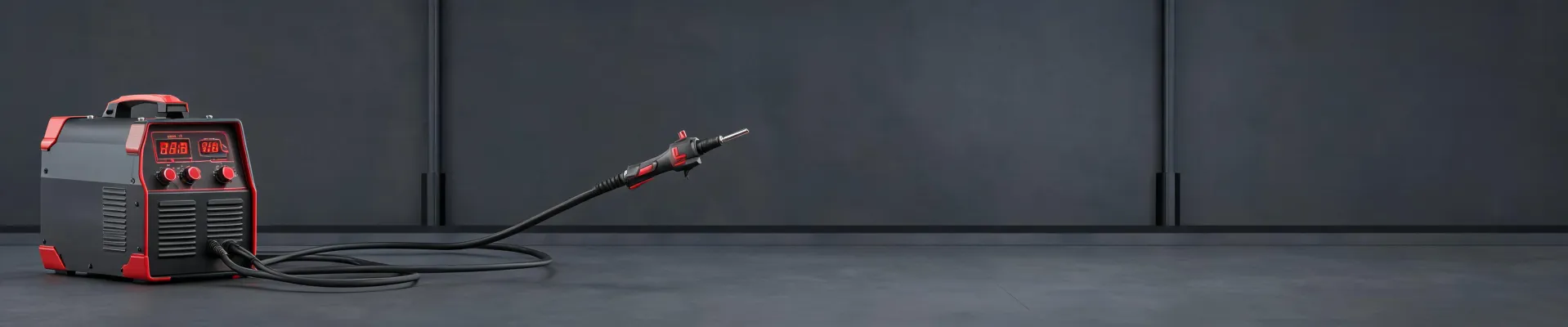
Fronius Battery Welder vs Evergreen TIG Welder vs Zapp Welding Machine: A Buyer's Comparison
Posted on 2026-09-07 by Elise Marceau
The Real Question Behind Fronius Battery Welder vs. Evergreen TIG vs. Zapp
Last spring, maintenance asked me to source a 'portable welder that doesn't need a generator.' The shortlist had three names: a Fronius battery welder, an Evergreen TIG welder, and a Zapp welding machine. At first it looked like a normal brand comparison. It was not. The real difference was not the logo; it was the power system behind the machine.
In my view, the comparison should start with the job, not the brand. I use three questions before I look at amps:
- Where will the machine be used: workshop, truck, roof, or remote site?
- Does the job need continuous welding or short, interrupted work?
- What is the machine's support chain when it stops working?
The answers tell you more than any spec sheet. The way I see it, this is a comparison between battery-driven portability and conventional plug-in reliability. The Fronius battery welder sits on the portability side. The Evergreen TIG and the Zapp machine sit on the plug-in side.
Where Are Fronius Welders Made?
The question I hear from our maintenance team is, 'Where are Fronius welders made?' The short answer is Austria. Fronius develops and produces welding machines in Austrian production facilities, including its battery-powered portable unit. That is confirmed by the company's own site (fronius.com).
I care about this for one practical reason: traceability. When I put a Fronius battery welder on a purchase order, I expect a legal manufacturer, a technical file, and a clear owner's manual. That matters for equipment that draws real current and creates hot metal in uncontrolled environments.
Does that make an Evergreen TIG welder or a Zapp welding machine automatically risky? No. But the burden is on the seller to tell me who actually manufactured the machine and where I can get it repaired. A nameplate without an address is not enough.
There is also an old belief that Austrian-made equipment means slow parts delivery. That may have been true in the era before digital parts catalogs. Today, online documentation and distributor networks have largely solved that problem, provided the distributor actually cares enough to publish the information.
Duty Cycle: Why the Fronius Battery Welder Is Not a TIG Replacement
Here is where expectations often go wrong. A Fronius battery welder is designed for portable maintenance and repair work. It supports short electrode runs, tacking, and quick fixes without a generator. It is not designed to lay down eight hours of continuous root passes. If that is the job, a battery-powered unit is the wrong tool.
The Evergreen TIG welder is a different category. It is a mains-fed TIG machine. If the work is AC or DC TIG—stainless or aluminum—it has a process advantage that no battery-powered compact welder can match. TIG still requires gas, filler rod, and stable supply. When it is set up correctly, it is the better choice inside a workshop.
The Zapp welding machine, in the quote I saw, was positioned as the light, backup-oriented unit. That type of machine has a place, but it is still grid-dependent. If the power point is the problem, a small plug-in unit does not solve it.
I have also learned that duty cycle numbers should not be read in isolation. Some machines look fine on paper, but their thermal limits appear when the workshop is hot and the job is long. A machine that stops after two meters of weld is not cheaper. It is an interruption.
I ordered the Fronius battery unit and then spent two weeks asking myself whether I had made the right call. What if a crew needed a longer weld on a steel frame? In the first field week, the answer came back: the machine did the short repairs it was bought for and came back with empty batteries. Not ideal for continuous work, but exactly what we needed.
The Plug for Welding Machine Is Not an Afterthought
The most overlooked detail in this entire purchase is the supply connection. Let me say it directly: never treat the plug for welding machine as an afterthought. The plug, the socket, the extension cable, and the circuit rating all have to match before the machine can work.
A plug-in welding machine can arrive with a country-specific 16A plug, a CEE connector, or a three-phase connector. The right choice depends on local regulations and the actual current draw. An adapter might let the machine run for a demo, but it can also cause voltage drop and overheating. Which, honestly, is how unnecessary repairs happen.
The Fronius battery welder removes this problem on the job site—no power point, no long extension lead. But it creates a different requirement: charging. I had to plan where crews would recharge the battery. We added charging points and a spare battery to the quote. That planning mattered more than the price of the machine.
Support and Downtime: The Admin View
As the person who manages the purchase process, I do not judge equipment by the list price alone. The real cost appears when the machine stops working. I have made the mistake of choosing a lower quote without verifying the support chain, and we paid for it later. A lesson learned the hard way.
Before placing an order, I now ask three things:
- Is there a physical service point with someone who understands the machine?
- Are spare parts listed and available?
- Does the warranty cover transport, or are we paying to ship it back?
Fronius usually answers those questions with an established support network and published documentation. Evergreen and Zapp can also have good local support through their importers. The point is to check it before the purchase order, not after the fault code appears.
Which One Would I Buy?
If I was buying for a maintenance team working in places without reliable power, the Fronius battery welder would get the budget. It will not replace a workshop TIG machine, and it should not be asked to do production welding. But for short field repairs, it removes the need for a generator and makes the work safer in awkward locations.
If the work is inside a workshop and the process is TIG, the Evergreen TIG welder deserves a close look. You need to verify duty cycle at a realistic ambient temperature and confirm that the plug matches the building supply. To be fair, a dedicated TIG machine is often the only realistic way to get clean aluminum welds.
The Zapp welding machine is worth considering when you need a compact backup unit and the seller can prove that service parts are available. Otherwise, a low price disappears as soon as downtime starts.
No single machine wins this comparison. The winner depends on where the operator is standing, what process the job requires, and whether the power supply can handle it. That is the part that takes time to understand, but it is the part that prevents the purchase from becoming a mistake.

Elise Marceau
Elise Marceau is an LED display and digital-signage systems analyst covering LED video walls, modular screens, transparent LED, control processors, and indoor or outdoor signage. She applies IEC 62368-1 safety principles while comparing pixel pitch, luminance, contrast, refresh rate, colour uniformity, viewing angle, ingress protection, power density, module serviceability, and signal redundancy. Her specification guides help integrators, venue operators, retailers, and procurement teams align viewing distance, ambient light, content format, installation access, electrical load, and lifecycle support.
Leave a Reply
Recent welding notes
The Cheap Marking Equipment Trap: Why Code Quality Is a Brand Decision
A purchasing manager's deep dive into the hidden costs of CO2 laser marking machines, continuous inkjet printers, and other marking equipment—and why output quality shapes customer perception.
Audio Factory vs Audio Manufacturer: Small-Order Buying for Stage Speakers, Subs, and Point Source Gear
A procurement admin compares factory-direct audio suppliers and established audio manufacturers for small orders—MOQs, point source speakers, subwoofers, HDL20 stage speakers, support, and total cost.
Fronius, Wattpilot Pricing, and the Welding Questions I Actually Get Asked
A procurement manager's no-fluff answers on Fronius welders, Wattpilot Australia pricing, stick welder value, Menards MIG welder options, roaddogjobs welder listings, and what a PPR welding machine actually is.
Why I Choose Specialized Welding Suppliers Over 'One-Stop' Industrial Vendors
An admin buyer's argument for specialization in welding equipment purchasing, from Fronius Primo 5.0-1 pricing to welding carts, Rogue TIG welders, manipulators, and the Mexico electric welding machine market.
Why I Pay for Delivery Certainty on an Elite Welding Machine — and Where Fronius Fits
A procurement manager explains why the cheapest welding quote often costs more, how to evaluate MIG welder purpose, small TIG welders for aluminum, and why Fronius downloads matter for TCO.
Fronius Cobot Welding System: How I Saved a $42K Girth Welding Contract with 36 Hours to Spare
An emergency welding contractor shares the real story of rescuing a failed girth welding project using a Fronius cobot welding system, TIG welder electrodes, and a used laser welding machine—plus what I learned about Fronius Primo 5.0-1 pricing and equipment sourcing.
Fronius Welders, Ohmpilot Pricing, and Truck-Bed Rigs: 7 Questions I Actually Get Asked
Straight answers on Fronius welder value, Fronius Ohmpilot price ranges, ventilation setups, truck-bed welding rigs, and what's actually moving in welding machine news — from someone who coordinates emergency equipment orders for a living.
Fronius vs Millermatic 211 Pro vs Ruffian: How to Choose a MIG Welder by Scenario
A procurement admin's scenario-based guide to MIG welder selection, including Fronius welder reviews, Millermatic 211 Pro MIG welder, Ruffian welding machine, and Fronius Smart Meter 63A-3 price in Germany.
The Procurement Trap: Why a Cheap Welding Machine 250 Costs More Than It Saves
A purchasing administrator's deep dive into why cheap welding equipment hurts quality perception, uptime, and total cost—and how Fronius, Rebel AC/DC welders, Fronius welder parts, and laser systems fit into a smarter buying process.
Fronius, Small Orders, and the Hidden Cost of Cutting Corners in Welding and Solar
A quality manager explains why small orders for Fronius welders, commercial grid-tie solar inverters, and fiber optic welding machines often hide bigger costs—and how to verify specs without overpaying.