A Fronius Welding Machine, a Tank Shop, and a Checklist That Saved the Order
Posted on 2026-08-24 by Elise Marceau
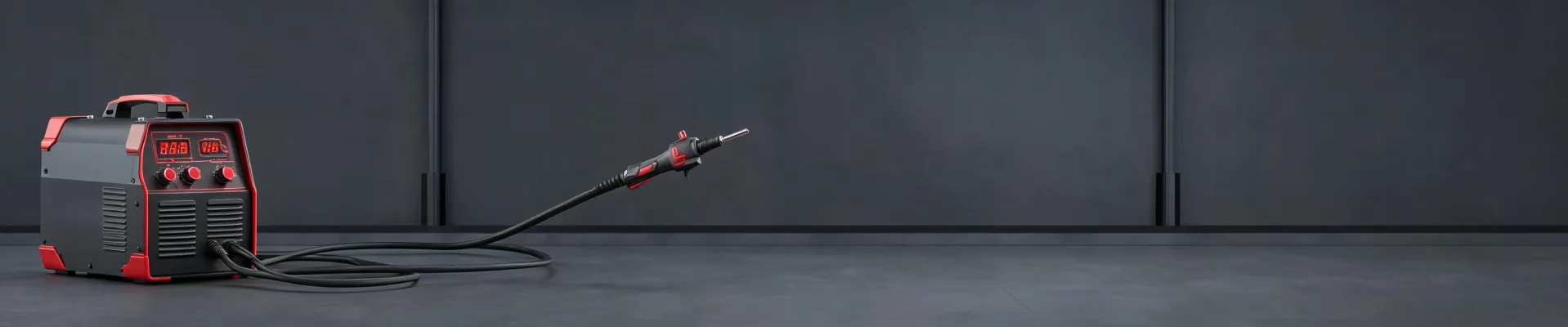
Last March, I walked into a tank fabricator's shop and saw exactly what had been missing from my morning email thread: a Fronius blue welding system sitting in the middle of the floor. Behind it, a brand new automatic tank girth welding machine was being fitted with a seam tracking sensor.
I'm a quality and brand compliance manager at an industrial welding equipment distributor. I review roughly 200 machines a year before they go out the door, and I've rejected 11% of first deliveries in 2024 for spec mismatches. That morning, I almost rejected this one too.
The day a blue machine changed my checklist
Three months earlier, a tank manufacturer called with a straightforward request. They needed an automatic tank girth welding machine for 12-foot diameter steel tanks. They also wanted a commercial TIG welder for root passes and the areas where manual control mattered.
The plant manager said his old setup was inconsistent. Some welds looked great. Others were borderline. He didn't want to chase that problem again.
I put together a spec with a Fronius TIG power source, a mechanized girth welding column, and a seam tracking package. I sent it over with a simple note: this is the spec we need to hit, not the starting point.
Then he said something that changed the conversation. 'I just want my welding machine blue, like the one you showed me at the trade show.'
Blue isn't a technical spec, but it's a shortcut. It means the machine came from a company that treats welding and solar as engineering problems, not assembly tasks. I'm not saying blue is a magic color. I'm saying that request told me the customer was already thinking about quality.
The purchasing manager, meanwhile, found a cheaper automatic tank girth welding machine from an overseas supplier. Half the price, same claimed specs. I wasn't going to call it bad. I just asked to see the manufacturer's inspection procedure and a weld procedure qualification record that met ASME IX requirements.
The answer should have been easy. Instead, I heard this: 'We can send that after the order.'
That silence changed how I thought about the whole project. A machine can look right and still be a liability if the process behind it hasn't been proven.
What the comparison actually showed
We set up a side-by-side test before anyone signed anything. Same 3/16-inch plate, same filler, same 185 amps. The competing power source ran, but after twenty minutes the arc started to wander. The Fronius commercial TIG welder stayed right on its setpoint through the entire run.
The operator looked at me and said, 'I've never seen that before.' Seeing those two arcs side by side made me realize why verification is worth more than an hour of arguing about price.
I also told the plant manager about the Fronius laser hybrid welding system I'd seen in early 2024. It's a completely different machine class, but it made the same point: the hardware matters less than the control of the process. On a tank shell, you don't need laser speed. You need repeatable arc behavior, consistent shielding gas, and a machine that doesn't drift after the first few welds.
The Fronius Symo Gen24 10.0 plus price question
While we were waiting on test coupons, the plant manager asked about a rooftop solar array. He had seen Fronius inverters online, and he wanted a number for his budget. Specifically, he asked about the Fronius Symo Gen24 10.0 plus price for a 30 kW system.
The Fronius Symo Gen24 10.0 plus price from my distributor quotes was around $3,100 to $3,400 as of February 2025, before labor and permits. I told him to verify current pricing on Fronius's website before ordering, because inverter pricing moves. But I also said what I say to every customer: don't choose an inverter by price alone. Compatibility with battery chemistry and grid requirements matters more. He nodded and walked back to the weld coupons.
The result and the one thing I'd change
The order went ahead with the automatic tank girth welding machine and the Fronius commercial TIG welder. The first weld coupons came through overnight. By the time I got to the shop, the operator had already marked them: 'best welds this line has ever made.'
Here's the thing: none of that happened because I'm a brand fanboy. It happened because we refused to skip the verification steps. The checklist I use has twelve points, and number three is always the same: show me the written procedure. That one line has saved us an estimated $8,000 in potential rework since I added it in 2022.
I still kick myself for not asking the overseas supplier for their QA plan at the very first quote. If I'd insisted earlier, we'd have saved three weeks of debate. One of my biggest regrets is letting 'we'll see the details later' slip through. Later is where bad welds come from.
Prevention isn't dramatic. It's a boring, repetitive set of checks done before the torch ever lights up. With a Fronius machine, those checks are easier because the hardware is built to hold a spec. But no machine can save you from skipping the questions that find the gaps. Ask them before you buy, not after you weld.

Elise Marceau
Elise Marceau is an LED display and digital-signage systems analyst covering LED video walls, modular screens, transparent LED, control processors, and indoor or outdoor signage. She applies IEC 62368-1 safety principles while comparing pixel pitch, luminance, contrast, refresh rate, colour uniformity, viewing angle, ingress protection, power density, module serviceability, and signal redundancy. Her specification guides help integrators, venue operators, retailers, and procurement teams align viewing distance, ambient light, content format, installation access, electrical load, and lifecycle support.
Leave a Reply
Recent welding notes
The Cheap Marking Equipment Trap: Why Code Quality Is a Brand Decision
A purchasing manager's deep dive into the hidden costs of CO2 laser marking machines, continuous inkjet printers, and other marking equipment—and why output quality shapes customer perception.
Audio Factory vs Audio Manufacturer: Small-Order Buying for Stage Speakers, Subs, and Point Source Gear
A procurement admin compares factory-direct audio suppliers and established audio manufacturers for small orders—MOQs, point source speakers, subwoofers, HDL20 stage speakers, support, and total cost.
Fronius, Wattpilot Pricing, and the Welding Questions I Actually Get Asked
A procurement manager's no-fluff answers on Fronius welders, Wattpilot Australia pricing, stick welder value, Menards MIG welder options, roaddogjobs welder listings, and what a PPR welding machine actually is.
Why I Choose Specialized Welding Suppliers Over 'One-Stop' Industrial Vendors
An admin buyer's argument for specialization in welding equipment purchasing, from Fronius Primo 5.0-1 pricing to welding carts, Rogue TIG welders, manipulators, and the Mexico electric welding machine market.
Why I Pay for Delivery Certainty on an Elite Welding Machine — and Where Fronius Fits
A procurement manager explains why the cheapest welding quote often costs more, how to evaluate MIG welder purpose, small TIG welders for aluminum, and why Fronius downloads matter for TCO.
Fronius Cobot Welding System: How I Saved a $42K Girth Welding Contract with 36 Hours to Spare
An emergency welding contractor shares the real story of rescuing a failed girth welding project using a Fronius cobot welding system, TIG welder electrodes, and a used laser welding machine—plus what I learned about Fronius Primo 5.0-1 pricing and equipment sourcing.
Fronius Welders, Ohmpilot Pricing, and Truck-Bed Rigs: 7 Questions I Actually Get Asked
Straight answers on Fronius welder value, Fronius Ohmpilot price ranges, ventilation setups, truck-bed welding rigs, and what's actually moving in welding machine news — from someone who coordinates emergency equipment orders for a living.
Fronius vs Millermatic 211 Pro vs Ruffian: How to Choose a MIG Welder by Scenario
A procurement admin's scenario-based guide to MIG welder selection, including Fronius welder reviews, Millermatic 211 Pro MIG welder, Ruffian welding machine, and Fronius Smart Meter 63A-3 price in Germany.
The Procurement Trap: Why a Cheap Welding Machine 250 Costs More Than It Saves
A purchasing administrator's deep dive into why cheap welding equipment hurts quality perception, uptime, and total cost—and how Fronius, Rebel AC/DC welders, Fronius welder parts, and laser systems fit into a smarter buying process.
Fronius, Small Orders, and the Hidden Cost of Cutting Corners in Welding and Solar
A quality manager explains why small orders for Fronius welders, commercial grid-tie solar inverters, and fiber optic welding machines often hide bigger costs—and how to verify specs without overpaying.